In many cities there are bars and clubs, but only a few places where you can walk in, have a coffee and explain yourself to nobody. In Munich, the Sub is one of them. The Schwul-Queeres Zentrum at Müllerstraße 14, known as the Sub, turns 40 in 2026. Its history shows what a queer community centre can do and how to recognise a good one, even if you do not live in Munich.
How the Sub began
On 4 September 1986, twelve of the 21 men present signed the statutes of the Schwules Kommunikations- und Kulturzentrum München, the Sub for short. It was the height of the AIDS crisis. According to the association's press release of 25 February 2026, Peter Gauweiler, then a state secretary in the Bavarian interior ministry, called for compulsory HIV tests, and the federal MP Horst Seehofer was quoted in Der Spiegel with a plan to concentrate infected people in special homes. In that climate the Sub was meant to give gay men their first space of their own, where you could meet without being expected to buy anything.
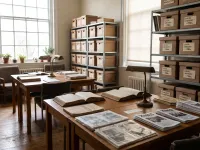
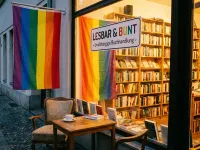
The association got its own premises in 1988, at Müllerstraße 44. There it opened the Sub Infoladen for gay men, open daily, with counselling, a library, an archive and a café. The association says the concept still holds. Since 2012 the Sub has been at Müllerstraße 14, in a building of 524 square metres rented by the City of Munich.
What a centre like the Sub offers
The Sub says it works according to need. Over time these were added:
- Counselling: A counselling service since 1997, and a chemsex drug counselling service since 2021.
- HIV prevention: The State of Bavaria has funded prevention work at the Sub since 1995.
- Refugees: From the 2010s the Sub has advised queer refugees, running German conversation courses since 2012 and starting the mentoring programme Refugees@Sub in 2015.
- Culture: Exhibitions in the café, stage events, a library.
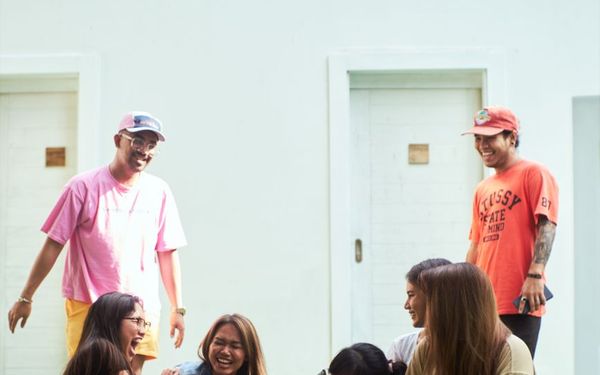
- Self-help and leisure: Groups from Gay & Gray to board games and a burnout group.
- Strong!: Since 2019, the Bavaria-wide specialist service against discrimination and violence for LGBTIQ* people, which grew out of an anti-violence project at the Sub.
The gay centre gradually became one for the whole queer community. Since 2024 it has used the name Schwul-Queeres Zentrum in public, while the official association name is still Schwules Kommunikations- und Kulturzentrum.
Politics and neighbours
From the start the Sub was involved in organising Munich Pride, which according to the press release has taken place since 1980. Since 2014 the association has helped organise the demonstration for the International Day Against Homophobia, Biphobia, Intersexphobia and Transphobia. In 2019 it pushed a petition for safe housing for queer refugees, in 2022 one for a queer action plan, whose first version the Bavarian government has since presented. Every year since 1991 the Sub has celebrated its birthday with the Hans-Sachs-Straßenfest. The association names diversity München, LesCommunity and the Münchner Aids-Hilfe as other important voices of the scene. The youth organisation diversity München grew out of a workshop at the Sub in 2000 and has run its own centre since 2007.
Who keeps it running
By its own account the Sub has 461 members, 16 paid staff and about 180 volunteers. The café is open 365 days a year, which board member Jörn Vogt says is only possible through volunteering. The City of Munich has funded the association regularly since 1991. The two belong together: without volunteers there would be no café, without public money no counselling.
Why places like this stay necessary
The association points to figures from the Strong! service: in 2025 it recorded 413 incidents of discrimination and violence against LGBTIQ* people, 124 more than the year before. The incidents range from insults and threats to serious assault. For comparison the press release cites figures from the Bavarian government: 177 reported offences in 2024 against 190 in 2023. The two figures measure different things, one counselling cases and the other police reports. They do not contradict each other, but they cannot be compared directly.
How to recognise a good centre in your own city
The Sub is a big example, and not every city has one. Things to look for:
- Open doors, no pressure to spend. You do not have to order anything to be there.
- Counselling by trained staff. Not only volunteers, but paid posts too.
- Transparent funding. Non-profit associations name their funders.
- More than one target group. Groups for young people, older people, refugees and trans* people show that the house grows with its community.
- Regular opening hours. In winter and on holidays too.
If you find nothing in your city, a look at groups nearby, such as youth groups or HIV support organisations, often helps, since they tend to know the meeting places.
Visiting Munich
The Sub is at Müllerstraße 14. Whether exhibitions or talks are on is listed on the association's website: https://subonline.org. Information as of 30 October 2026. Opening times change, so check before you go.
Frequently asked questions
Sources
- subonline.org · Das_Sub_wird_40_Sub_PM_2026_02_25
- subonline.org