Choosing LGBTQ+-owned businesses keeps community spaces alive. How to find certified and queer-run venues, and why your attention matters as much as your wallet.
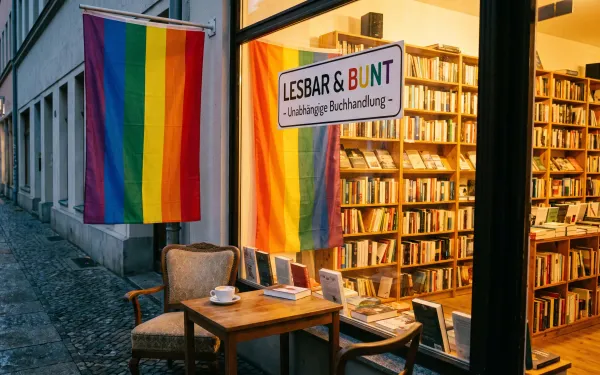
Where you spend your money is a quiet form of politics. Choose a queer-owned café over a chain, and a slice of that bill stays inside the community: paying a rent that keeps a gathering place open, funding the owner who sponsors the local volleyball league, signalling to landlords that the storefront is worth keeping. LGBTQ+ businesses are rarely just businesses. They are some of the few rooms where being yourself is the baseline, not the exception.
Why Queer-Owned Businesses Are Worth Protecting
The buying power behind this is enormous. Estimates from LGBT Capital put the global purchasing power of LGBTQ+ adults somewhere in the multi-trillion-dollar range, with the United States alone accounting for well over a trillion. That figure, sometimes called the "pink dollar," is often pointed at large corporations during Pride season. Pointed instead at the bar, bookstore, or salon down the street, it does something more durable.
These places tend to carry weight beyond their balance sheets:
- They double as community hubs. A bar hosts a sober-curious night; a café posts the flyer for a support group; a bookstore runs the only queer story hour in town.
- They offer safety as a feature, not an afterthought. For many people these are the first spaces where holding hands or using a chosen name feels unremarkable.
- They keep neighborhoods on the map. A cluster of visible queer storefronts is part of what makes a gayborhood legible to newcomers and locals alike.
There is real fragility here too. When a venue serves a small share of the population, losing even a fraction of regulars can make the math unworkable. San Francisco's Castro has watched dozens of bars close over the decades as rents climbed, and the pattern repeats wherever commercial space gets squeezed. You can see the same dynamic playing out across gay locations worldwide, from long-established districts to scenes that are only now finding their footing.
Certified, Allied, or Simply Queer-Run
"LGBTQ+-owned" can mean a few different things, and the distinction is worth understanding before you go looking.
In the United States, the formal benchmark is LGBTBE certification from the National LGBT Chamber of Commerce (NGLCC). To qualify, a business must be at least 51% owned, operated, managed, and controlled by an LGBTQ+ person or people who are U.S. citizens or lawful permanent residents. The NGLCC is currently the only third-party body issuing this certification, it involves a documentation review and a site visit, and the credential lasts two years before re-certification. That standard exists mainly so large companies can verify diverse suppliers, but it also gives shoppers a reliable signal.
Plenty of beloved queer businesses never bother with certification. A neighborhood bar run by two women, a trans-owned tattoo studio, a freelance photographer who shoots weddings the registry office won't celebrate: all queer-owned, none certified. Certification proves ownership; the absence of it proves nothing. Both deserve your custom.
Then there are allied businesses: straight-owned, but visibly supportive and safe. They matter, especially in towns with no queer-owned options at all. Just keep the categories straight in your head, because a rainbow flag in the window during June is marketing, not ownership.
How to Find Them Without Guessing
Finding queer-owned businesses has gotten easier, though it still rewards a little curiosity.
- Chamber and directory listings. The NGLCC maintains a supplier directory, and regional LGBT chambers of commerce publish local member lists. These are the most reliable starting points in the US.
- Mapping and review apps. Some platforms now let businesses self-identify as LGBTQ+-owned, surfacing them with a filter or badge. Treat self-identification as a lead, not proof.
- The window itself. Stickers, flags, and pronoun signage are imperfect signals, but in a strange city they still help you read a street quickly.
- Local queer media. City magazines, newsletters, and community-center recommendations tend to know who actually owns what.
Traveling complicates this. A venue that markets to tourists isn't necessarily owned by anyone in the community, and in some regions visibility carries risk that makes overt signage unwise. If you want a deeper method for landing somewhere new, the guide on finding community when traveling covers how to read a scene before you arrive, and the gay travel hotspots roundup highlights the cities where queer-owned venues cluster.
Spending Is Only the First Lever
Your wallet helps. Your attention helps more, and it costs nothing.
- Leave honest reviews. A handful of recent five-star reviews can decide whether a small place shows up in someone's search at all.
- Recommend out loud. Word of mouth still moves more business than any ad budget a corner bar could afford.
- Show up for the slow nights. Tuesdays and rainy afternoons are when a venue lives or dies, not the packed Pride weekend.
- Buy the gift card, book the table, pre-order the merch. Cash flow timing can matter as much as total sales for a small operation.
- Tell owners what's working. Direct, specific feedback is rarer and more useful than a generic compliment.
The Gentrification Catch
There's an uncomfortable twist worth naming. The same money that keeps queer spaces alive can also price them out. As a district becomes desirable, rents climb, rentals convert to condos, and the businesses that drew people there in the first place get pushed out, often along with the less affluent members of the community who made the neighborhood what it was.
No shopping habit fixes that on its own. But supporting independent, locally rooted businesses, showing up for the older and less polished venues, and backing efforts to protect community space all push in the opposite direction from displacement. The goal isn't just to spend inside the community. It's to help the community keep its address.
Every time you pick a queer-owned business over an interchangeable alternative, you're casting a small vote for the kind of neighborhood you want to still exist in ten years.
Frequently asked questions
Last reviewed: 25. June 2026