From a single San Francisco bar to a worldwide network with its own flag and vocabulary: how bear culture started, what terms like cub, otter, and wolf actually mean, and how to walk into your first bear night.
Where bear culture started
By the late 1970s and into the 1980s, gay male culture in cities like San Francisco leaned hard into one look: young, slim, clean shaven, gym toned. Men who didn't fit that picture (bigger, hairier, older, less polished) often felt out of place in the established gay bars. The Lone Star Saloon in San Francisco is usually credited as the place where these men found each other, and it became the starting point for what would later be called bear culture.
In 1987, photographer Chris Nelson and his partner Richard Bulger gave the scene a public face. They took over a small photocopied zine of photos and personal ads that a friend had started, and turned it into BEAR magazine, filled with pictures of "naturally masculine" men, many of them shot on the streets of San Francisco. Their small office on the edge of the Castro quickly became a gathering spot in its own right.
From bar scene to global movement
The early 1990s gave the community its first big stage. In 1992, San Francisco hosted the first International Bear Rendezvous, which grew out of an earlier Bear Expo and included the first International Mr. Bear competition. The event ran through 1994, pulling in bear fans from multiple countries.
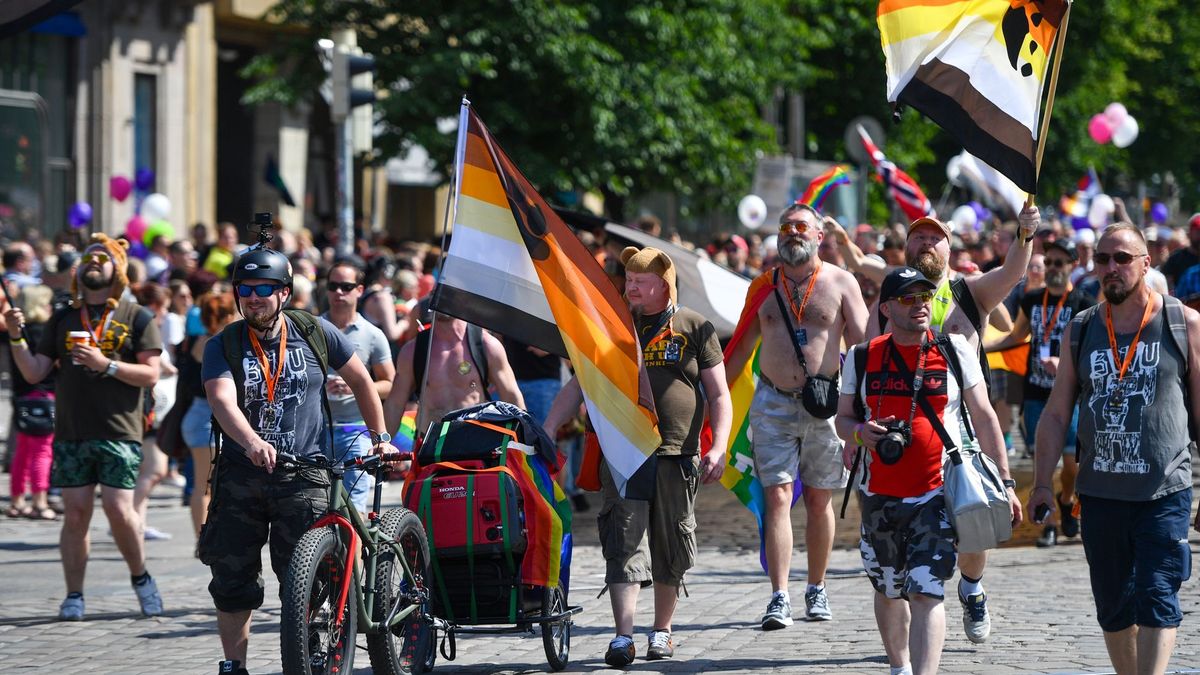
The community got a recognizable symbol in 1995. Craig Byrnes, a psychology student and bear himself, designed four flag prototypes as part of a research project on bear culture. He brought them to a Chesapeake Bay Bears gathering and let the crowd vote. That design became the International Bear Brotherhood Flag, still flown at Pride events and community gatherings worldwide since the late 1990s.
The vocabulary you'll run into
Walk into bear spaces for the first time and you'll hit some scene-specific terms fast.
Bear usually refers to a hairy, bearded, heavyset or stocky gay man, often paired with a laid-back, friendly demeanor. Cub describes a younger, or younger-looking, bear. Otter refers to a leaner or less hairy man who still has a lot of body and facial hair, somewhere between a twink and a bear. Wolf describes a leaner, muscular, more groomed type. Chaser refers to someone attracted to bears or related types without identifying as one themselves.
None of these are fixed categories. They're community shorthand for describing attraction and style, not a replacement for how someone actually identifies.
What still defines the culture today
Beyond looks, the scene is often associated with a particular attitude: approachable, unpretentious, sex positive. That combination of aesthetic and attitude explains how the movement grew from a single bar in San Francisco into a worldwide network of local bear clubs, bars, and bear pride events.
For newcomers, bear bars and events tend to be deliberately low key. The easiest way in is through a local bear club or a bear night at an existing venue, usually without a strict dress code, and with an atmosphere that still pushes back against the perfectionism of the mainstream scene it grew out of.
Frequently asked questions
Sources
- bearworldmag.com · the-bear-flag-craig-byrnes-and-the-international-bear-brothe...
- en.wikipedia.org · Bear_flag_(gay_culture)
- en.wikipedia.org · Bear_Magazine
- sfgate.com · who-s-goldilocks-international-bear-rendezvous-3199532
- en.wikipedia.org · Bear_(gay_culture)
Last reviewed: 25. August 2026